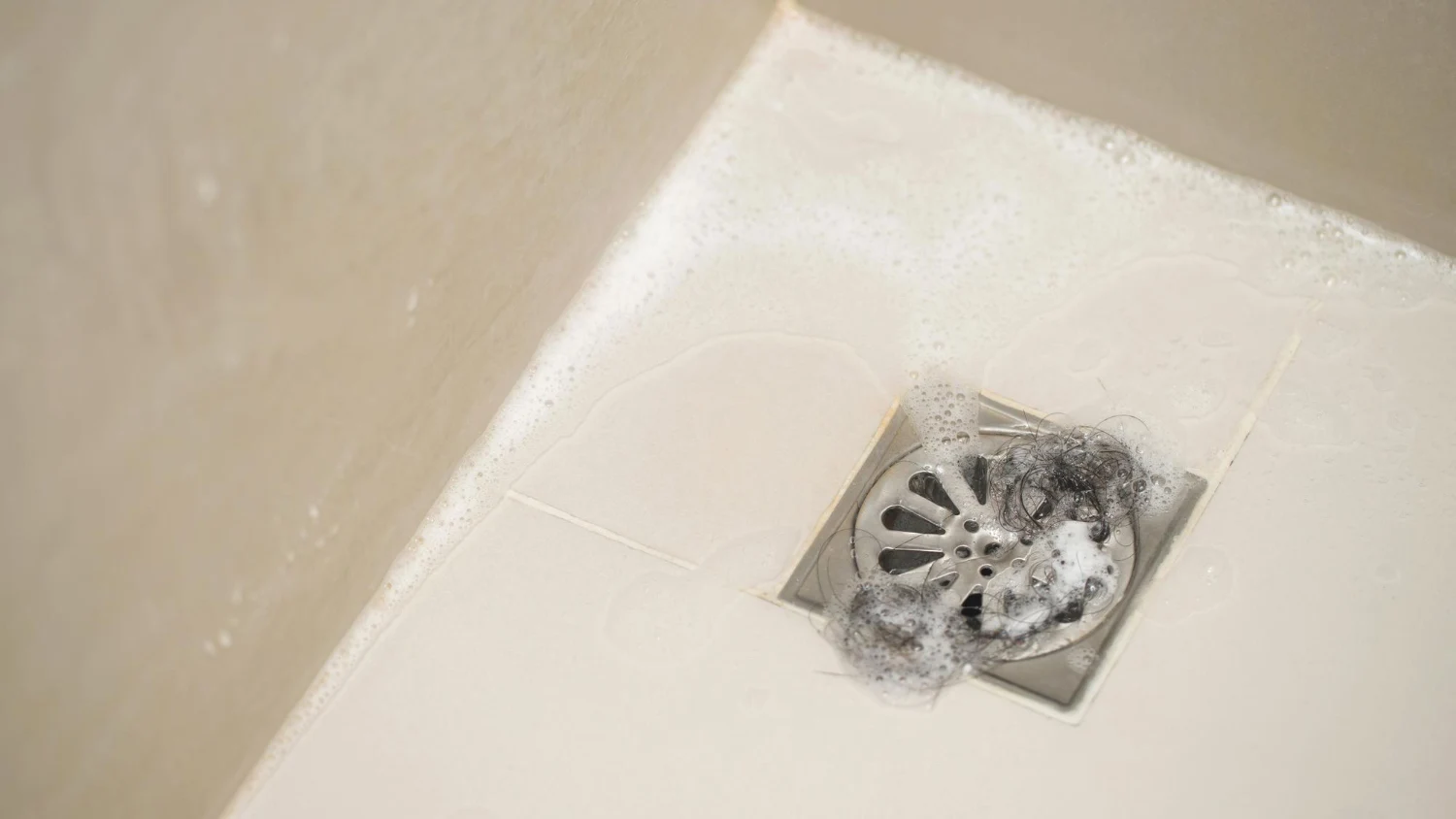
Unclogging a shower drain naturally in most cases involves loosening, lifting, and dissolving hair, soap scum, mineral buildup, and biofilm to achieve normal water flow without harsh chemical drain cleaners.
The fastest natural fix for most shower drain clogs is simple: remove the shower drain cover, pull out the hair clog with a gloved hand or plastic drain tool, flush the drain opening with hot water, and use baking soda with white vinegar only to break down leftover residue, not as a substitute for physical removal.
In bathroom inspections and real-world home service calls, the mistake I see most often is treating a shower drain clog like a chemistry problem when the blockage is actually a compacted hair plug sitting one or two inches below the drain strainer. Start there. You will usually solve the slow shower drain faster, cheaper, and with less mess.
Natural Shower Drain Unclogging: The Fastest First Steps
If your shower drain is slow, remove the visible blockage first, then use hot water and a mild natural cleaning method to clear the remaining buildup.
Use this order for the best chance of success:
- Remove standing water from the shower floor.
- Take off the shower drain cover or strainer.
- Pull out hair, lint, and soap sludge by hand or with a plastic zip tool.
- Flush the drain opening with hot water.
- Use baking soda and white vinegar if soap scum or odor remains.
- Plunge the shower drain only if water still drains slowly.
- Repeat a hot-water flush.
If you only try baking soda and vinegar, you may loosen residue but leave the real hair clog in place. That is why some “natural drain remedies” seem weak. The order matters.
Tools and natural supplies for a shower drain clog
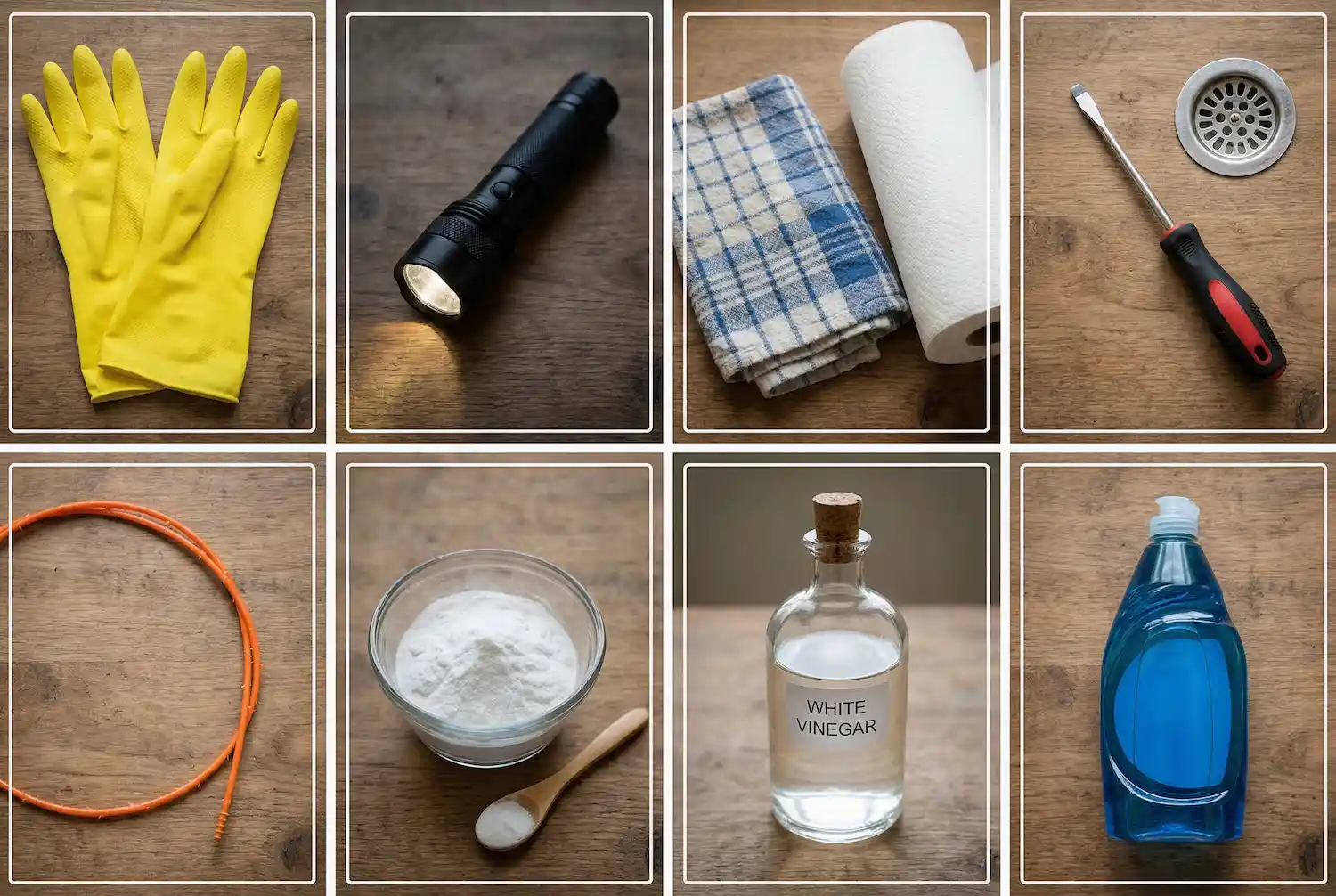
You do not need much:
- Rubber gloves
- Flashlight
- Old towel or paper towels
- Small screwdriver for the drain cover
- Plastic drain snake or zip tool
- Kettle or pot of hot water
- Baking soda
- White vinegar
- Dish soap
- Cup or small bucket to remove standing water
- Plunger, if needed
Natural shower drain safety before you start
A few quick checks can prevent damage:
- Do not mix vinegar with bleach.
- Do not pour vinegar into a drain that still contains chemical drain cleaner.
- Do not use repeated rolling-boil water in a PVC pipe or fiberglass shower base.
- Wear gloves. Shower drain sludge is dirty.
- Put screws from the drain cover in a safe spot. They disappear fast.
If you already used chemical drain cleaner
Do not plunge or snake the shower drain until the pipe has been flushed thoroughly and the cleaner is gone. Chemical splashes can burn skin and eyes. If you are not sure what is in the drain, stop and flush carefully with plenty of water before touching the blockage.
Why a Shower Drain Gets Clogged
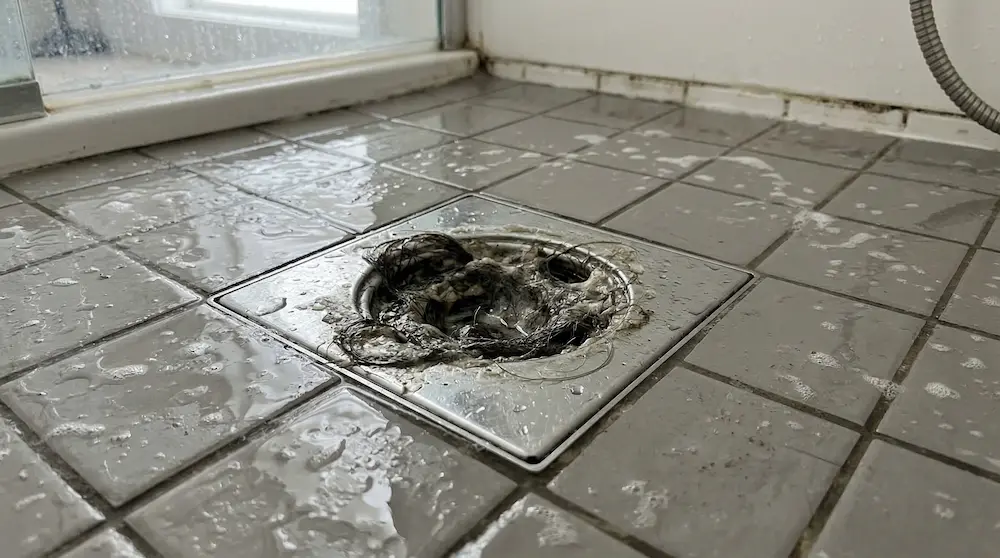
Most shower drain clogs are a mix of hair, soap scum, conditioner residue, body oil, and sometimes hard-water mineral scale.
A shower drain rarely clogs from one thing alone. The hair catches first. Then shampoo residue, bar soap film, shaving cream, dead skin, and body oil attach to the hair mass. Over time, that sticky clump narrows the drain line and traps even more debris.
Here are the most common shower drain blockage causes:
- Hair clog: The main culprit in nearly every shower drain.
- Soap scum: More common with bar soap and hard water.
- Conditioner and body wash residue: Leaves a slick film inside the drain pipe.
- Hard-water scale: Mineral deposits reduce pipe diameter.
- Biofilm: A slimy bacterial layer that can cause odor and trap debris.
- Small objects: Razor caps, bottle seals, children’s toys, and shower product packaging pieces.
A slow shower drain is often your early warning. At first, the water pools for a minute. Then it takes longer to drain. Then one day the shower pan fills around your feet.
Signs your shower drain clog is close to the drain opening
You can usually solve a near-surface clog yourself if you notice:
- Water drains slowly but still goes down
- You smell a sour or musty shower drain odor
- You can see hair or sludge under the strainer
- The clog developed gradually, not all at once
Signs the shower drain blockage may be deeper in the drain line
A deeper clog behaves differently:
- Plunging barely changes anything
- Water backs up fast
- More than one drain in the bathroom is slow
- You hear gurgling from the shower drain or sink
- The problem keeps returning after cleaning
If multiple fixtures are involved, the issue may be in a branch line or the main drain line, not just the shower trap.
Natural Shower Drain Methods Compared
The best natural shower drain method depends on the clog type: hair needs removal, soap scum needs loosening, and deeper blockages may need plunging or a drain snake.
Here is a simple comparison of the most effective options.
| Natural shower drain method | Best for | Time needed | Approx. cost in the US | What works well | Main limitation |
|---|---|---|---|---|---|
| Hand removal with gloves | Visible hair near drain opening | 5-10 minutes | $0-$5 | Fastest fix for surface hair clogs | Messy |
| Plastic drain snake / zip tool | Hair just below strainer | 5-15 minutes | $3-$10 | Excellent for compacted hair | May not reach deep clogs |
| Hot water flush | Soap residue, light buildup | 5 minutes | $0 | Good after hair removal | Weak against dense hair clogs |
| Baking soda + white vinegar | Soap scum, odor, film | 20-30 minutes | $1-$3 | Helps loosen residue naturally | Limited against thick hair plugs |
| Dish soap + hot water | Greasy residue, body oil film | 10 minutes | $1-$2 | Gentle and easy | Not enough for major blockage |
| Plunger | Partial blockage in trap or line | 5-10 minutes | $8-$20 | Can move stubborn soft clogs | Needs enough water seal |
| Enzyme drain cleaner | Organic buildup over time | Several hours to overnight | $10-$20 | Non-caustic maintenance option | Slow; not instant |
Baking soda and vinegar get the most attention online, but a plastic drain snake usually does more. That is the reality in most bathrooms.
How to Unclog a Shower Drain Naturally Step by Step
For a reliable natural shower drain fix, clean the drain opening first, remove the hair mass second, and use a residue-breaking rinse last.
Step 1: Remove standing water from the shower drain area
If water is pooled in the shower pan, scoop it out with a cup or small container. You do not need to dry the shower floor completely, but you do want to expose the drain opening.
Standing water dilutes your cleaning ingredients and makes it harder to see the blockage.
Step 2: Remove the shower drain cover or strainer
Most shower drain covers either lift off or are secured with one or two screws. Use a screwdriver if needed. Set the screws aside immediately.
Once the cover is off, use a flashlight to inspect the drain opening. If you see tangled hair, gray sludge, or a soap-ring buildup, you have probably found the source.
Step 3: Pull out the hair clog and debris
Put on gloves. Reach in and remove what you can by hand first.
Then use a plastic drain snake or zip tool:
- Insert the tool slowly into the shower drain.
- Twist gently if the clog feels thick.
- Pull the tool back out.
- Wipe off the hair and sludge.
- Repeat until the tool comes back cleaner.
This step is usually the turning point. Ugly, yes. Effective, also yes.
Why physical shower drain cleaning matters most
Hair does not dissolve quickly with pantry ingredients. A dense hair clog acts like a net. It traps soap scum and slime, and the drain line keeps narrowing. Once you remove the hair mass, the rest of the shower drain cleaning becomes much easier.
Step 4: Flush the shower drain with hot water
Run the hottest tap water available, or pour a kettle of very hot, but not aggressively boiling water down the shower drain in stages.
Use caution with these shower materials:
- PVC drain pipe: Very hot water is fine; repeated rolling-boil water is not ideal.
- Fiberglass or acrylic shower base: Avoid shockingly hot water directly on the surface.
- Older metal pipe: Hot water is generally safer, though buildup may still remain.
A hot-water flush helps melt soap film and carries loosened residue through the trap.
Step 5: Use baking soda and vinegar for leftover shower drain residue
If the shower drain still smells bad or drains a little slow, use this natural residue treatment:
- Pour about 1/2 cup of baking soda into the drain.
- Follow with 1 cup of white vinegar.
- Cover the drain loosely with a cloth or drain cover.
- Let the mixture sit for 15 to 20 minutes.
- Finish with a hot-water flush.
The fizzing action can help loosen soap scum and biofilm stuck to the inside of the pipe. It is not magic. It is a mild reaction that works best after you already removed the hair clog.
When baking soda and vinegar work best in a shower drain
Baking soda and vinegar are useful when:
- The shower drain smells musty
- Residue feels slimy rather than solid
- The clog is light to moderate
- You want a maintenance clean after physical removal
They are less useful when:
- The shower drain is fully blocked by hair
- A small object is lodged in the drain
- The blockage is deep in the branch line
- Grease or mineral scale is severe
Step 6: Try dish soap and hot water for body oil and soap film
If you use body wash, oily scrubs, or rinse off thick conditioner in the shower, dish soap can help cut residue.
Add:
- 1 to 2 tablespoons of dish soap
- Follow with very hot water after 10 minutes
Dish soap is a good follow-up, especially in households where the drain smells coated rather than rotten.
Step 7: Plunge the shower drain if water still drains slowly
A shower drain can often be plunged successfully if the clog sits in or near the trap.
How to do it:
- Add enough water to cover the plunger lip.
- Place the plunger over the shower drain.
- Press down gently first to create a seal.
- Pump 6 to 10 times.
- Lift and test drainage.
If your shower shares a line with a nearby tub or sink, plunging may move a soft blockage farther along the drain line.
Step 8: Repeat the shower drain flush and test
Run water for one to two minutes. Watch how fast it drains.
A successful fix usually looks like this:
- Water no longer pools around your feet
- The drain sound becomes smoother
- Odor drops noticeably
- The drain opening looks cleaner
If the shower drain is still backing up, the blockage may be deeper than a natural surface clean can reach.
Best Natural Shower Drain Solutions for Different Clog Types
Match the method to the blockage, because a hair clog, soap scum clog, and mineral scale clog do not respond the same way.
Hair clog in a shower drain
Best method:
- Remove drain cover
- Use gloves
- Use plastic drain snake
- Flush with hot water
Hair is the main issue. Go after the hair directly.
Soap scum in a shower drain
Best method:
- Physical removal if needed
- Baking soda and vinegar
- Dish soap
- Hot water flush
This works well when the drain line feels slimy or drains better after warm water.
Shower drain odor and biofilm
Best method:
- Remove visible sludge
- Use baking soda and vinegar
- Flush with hot water
- Clean the drain cover and strainer separately
Sometimes the smell is coming from the drain cover itself, not just the pipe.
Hard-water mineral buildup in a shower drain
Best method:
- Manual cleaning
- White vinegar soak on removable parts
- Repeated hot-water flushing
Mineral scale can be stubborn. If hard water is heavy in your area, a recurring slow shower drain may be partly a pipe-diameter problem, not just hair.
What Not to Do When Unclogging a Shower Drain Naturally
The wrong method can make a shower drain clog worse, damage the drain assembly, or create a safety hazard.
Avoid these common mistakes:
- Pouring baking soda and vinegar into a drain packed with hair and expecting instant results
- Using bleach for a shower drain clog
- Mixing vinegar with bleach or leftover drain cleaner
- Repeatedly pouring rolling-boil water into PVC plumbing
- Jamming a metal coat hanger into the drain and scratching the pipe
- Forcing a tool so hard that it damages the drain crossbars
- Ignoring a recurring clog for months
A shower drain that clogs every two or three weeks is sending a message. There is either a deeper blockage, too much hair entering the drain, or a trap that never gets fully cleaned.
Natural does not always mean harmless
White vinegar is mild compared with caustic drain opener, but any liquid in a drain can splash. A plunger can send dirty water back up. Use gloves. Use eye protection if you have already added any cleaner. Keep the process controlled.
How Long a Natural Shower Drain Fix Should Take
A normal shower drain clog near the opening should improve within 15 to 30 minutes once you physically remove the hair mass.
Typical timeline:
- 5-10 minutes: Remove cover and visible hair
- 5-15 minutes: Use plastic drain snake
- 15-20 minutes: Baking soda and vinegar wait time
- 2-5 minutes: Final hot-water flush and drainage test
If you have spent 45 minutes and the shower drain still empties slowly, the clog is probably deeper in the line or the trap is packed more tightly than a simple surface clean can solve.
That does not mean you failed. It means the blockage changed categories.
How to Prevent a Shower Drain From Clogging Again
The best way to keep a shower drain clear is to stop hair at the drain cover and remove residue before it turns into a sticky blockage.
Use these shower drain maintenance habits:
- Install a drain hair catcher or shower drain screen
- Remove trapped hair after each shower or every few showers
- Flush the shower drain with hot water once a week
- Clean the drain cover monthly
- Use a plastic drain snake once a month if hair shedding is heavy
- Wipe excess hair off your hands or shower wall into the trash, not the drain
- Limit heavy oil-based shower products if buildup is frequent
A simple monthly natural shower drain maintenance routine
- Remove and clean the drain cover.
- Pull out any visible hair.
- Flush with hot water.
- Use baking soda and vinegar if odor starts returning.
- Test water flow.
That five-minute routine can prevent the bigger Saturday-morning drain problem nobody wants.
When a Shower Drain Problem Needs a Plumber
Call a plumber if the shower drain keeps clogging after cleaning, if several drains are slow, or if you suspect a deeper branch-line or sewer-line blockage.
A professional should inspect the drain system if you notice:
- The shower drain clogs again within days
- The sink, tub, or toilet also drains slowly
- You hear gurgling in nearby fixtures
- Water backs up in another drain when the shower runs
- There is a sewer smell, not just a musty drain odor
- A plastic drain snake cannot reach the blockage
- An older home has cast iron or galvanized drain lines with heavy buildup
At that point, the issue may involve the trap, the branch drain, or the main line. A plumber can use a proper auger or inspection camera and diagnose the real cause without guesswork.
Frequently Asked Questions About Unclogging a Shower Drain Naturally
Can baking soda and vinegar unclog a shower drain with hair?
Baking soda and white vinegar can loosen soap scum and reduce odor, but baking soda and vinegar usually will not dissolve a dense hair clog by themselves. Your best move is to remove the hair first with gloves or a plastic drain snake, then use the vinegar rinse as a cleanup step.
What is the best natural way to unclog a shower drain without a snake?
If you do not have a plastic drain snake, remove the drain cover, pull out visible hair by hand, and flush the shower drain with hot water. After that, use baking soda and white vinegar to loosen leftover residue, then rinse again with hot water.
Is boiling water safe for a shower drain?
Very hot water is helpful, but repeated rolling-boil water is not the best choice for every shower drain. PVC pipe, acrylic shower pans, fiberglass bases, and some drain fittings can be stressed by extreme heat, so hot tap water or slightly cooled kettle water is safer.
Why does my shower drain keep clogging even after I clean it?
A recurring shower drain clog usually means one of three things: hair is entering the drain faster than you are removing it, the blockage sits deeper in the trap or drain line, or soap and mineral buildup are narrowing the pipe. If the shower drain keeps slowing down after repeated cleanings, a plumber should inspect the line.
Final answer
Unclogging a shower drain naturally comes down to one rule: remove the hair clog first, then clean the remaining soap scum and residue with hot water, baking soda, and white vinegar. For most homes, a glove, a drain tool, and ten focused minutes do more for a slow shower drain than any bottle of harsh chemical cleaner.