Unclogging a bathroom sink naturally is a home plumbing maintenance method that involves loosening, breaking up, or removing hair, soap scum, toothpaste residue, shaving debris, and mineral buildup without harsh chemical drain cleaners to achieve a clear, freely draining bathroom sink.
For most bathroom sink clogs, the fastest natural fix is simple: remove the pop-up stopper, pull out trapped hair, flush the bathroom sink drain with very hot water, then use baking soda and white vinegar; if the bathroom sink drain is still slow, clean the P-trap or use a plastic drain snake.
A common mistake I see homeowners make is starting with baking soda and vinegar while a thick hair plug is still wrapped around the bathroom sink stopper. That hair plug blocks the drain opening. Until the hair comes out, the rest of the cleaning steps usually do very little.
Why a Bathroom Sink Drain Gets Clogged in the First Place
Most bathroom sink clogs are not mysterious plumbing failures; most bathroom sink clogs are compacted hair, sticky soap film, toothpaste sludge, and skin oil collecting around the stopper, pivot rod, P-trap, or branch drain.
Your bathroom sink drain handles more residue than most people realize. Hair falls into the drain while brushing, shaving, and washing your face. Toothpaste hardens. Soap leaves film. Shaving cream adds foam and fatty residue. Over time, that mix turns into a dense paste that narrows the drain.
In many US homes, the first blockage forms in one of these spots:
- Around the pop-up stopper
- On the pivot rod connected to the stopper
- Inside the P-trap under the sink
- A little deeper in the bathroom sink drain line inside the wall
Hard water makes the problem worse. Mineral scale sticks to the inside of the drain pipe, which gives hair and soap scum an easy place to cling.
That is why some natural methods work fast and some do not. A fizzy reaction can help loosen soft buildup. A fizzy reaction will not magically erase a rope of hair wrapped around a metal stopper.
Natural Bathroom Sink Drain Tools and Supplies You Should Gather
The best natural bathroom sink unclogging plan uses a mix of pantry ingredients and physical cleaning tools, because bathroom sink clogs are usually part chemical buildup and part solid debris.

Before you start, gather these supplies:
- Rubber gloves
- Old towel or rag
- Small bucket or bowl
- Flashlight
- Paper towels
- Dish soap
- Baking soda
- White vinegar
- Very hot water
- Small sink plunger
- Plastic drain snake or zip tool
- Slip-joint pliers if the P-trap is tight
Bathroom Sink Drain Safety Rules
Natural does not mean careless. Follow these rules:
- Do not mix vinegar with bleach.
- Do not add baking soda and vinegar on top of a commercial drain cleaner.
- Do not pour a rolling boil into an old PVC drain system unless you know the piping can handle high heat.
- Do not force metal wire deep into a bathroom sink drain; metal wire can damage the stopper assembly or scratch the sink finish.
- Put a bucket under the sink before removing the P-trap. The trap always holds dirty water.
If your bathroom sink has standing water, scoop out enough water so your next step can reach the clog directly.
How to Unclog a Bathroom Sink Naturally Step by Step
Start with physical removal before you reach for baking soda and vinegar, because a bathroom sink drain clogged with hair needs hands-on cleaning first.
Step 1: Remove Standing Water From the Bathroom Sink Basin
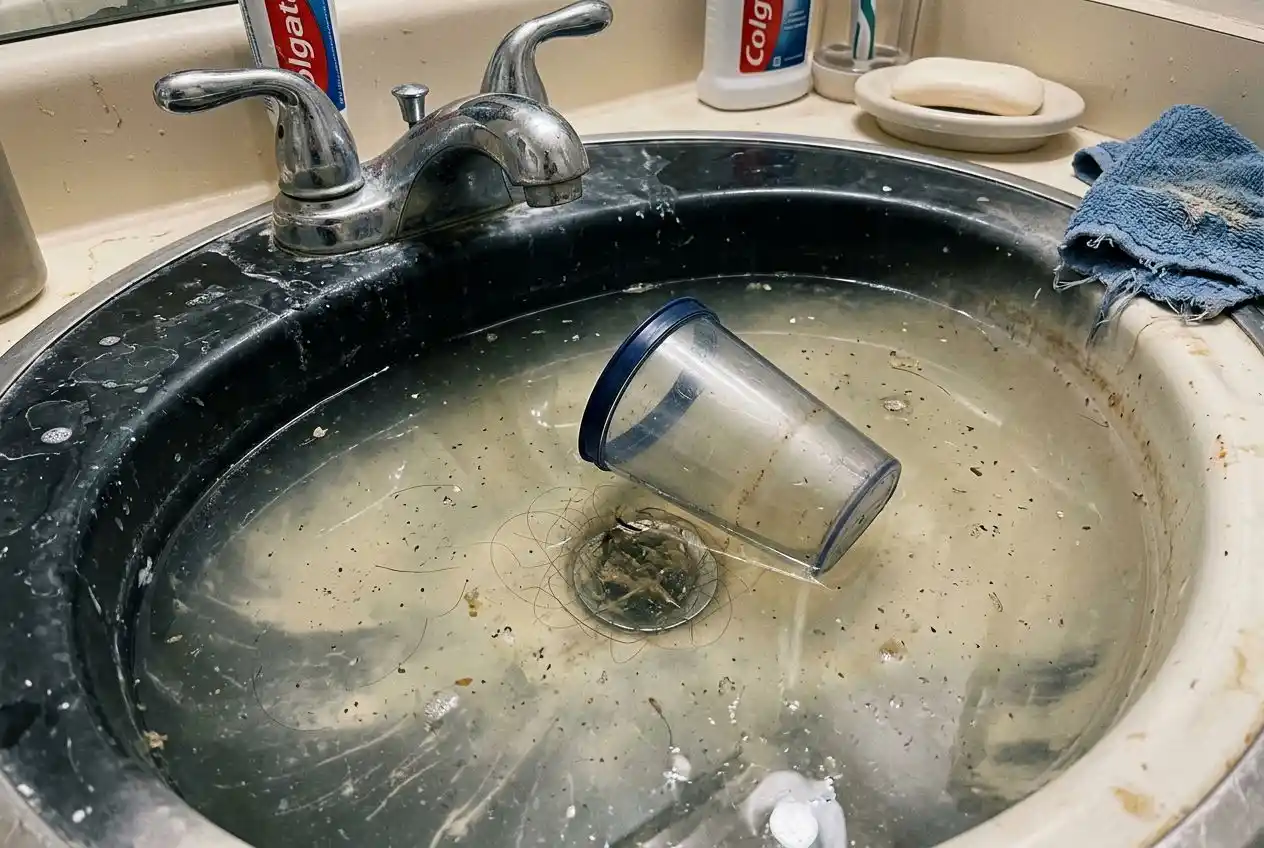
If the bathroom sink basin is full of murky water, remove most of the water with a cup, ladle, or small container. Pour the dirty water into a bucket or toilet.
Leave just a little water in the basin if you plan to use a plunger later. If you are starting with stopper cleaning, a mostly empty sink is easier to work with.
Step 2: Pull Hair and Debris From the Bathroom Sink Pop-Up Stopper

The pop-up stopper is the first place to check. In many bathroom sinks, you can lift the stopper straight out. In others, you need to loosen the retaining nut behind the drain pipe under the sink and slide out the pivot rod first.
Look closely at the stopper. You may find:
- Hair wrapped around the stopper base
- Toothpaste sludge
- Soap scum
- Black biofilm
- Grooming residue
Wipe everything off with paper towels. Clean the stopper with hot water and dish soap.
If your bathroom sink stopper will not lift out easily, look under the sink for the pivot rod assembly. Unscrew the retaining nut by hand or with pliers, pull the rod back, then remove the stopper from above.
This step solves a surprising number of bathroom sink clogs. Fast.
Step 3: Flush the Bathroom Sink Drain With Hot Water and Dish Soap
Once the stopper area is clear, add a few drops of dish soap directly into the bathroom sink drain. Then pour in very hot water.
Use about:
- 1 to 2 quarts of very hot tap water, or
- Heated water that is hot but not violently boiling
Dish soap helps loosen greasy residue and soap film. Hot water softens the paste sitting in the drain pipe.
If the bathroom sink drain begins to move water faster after this step, you likely had a light soap-and-toothpaste blockage.
Step 4: Use Baking Soda and White Vinegar in the Bathroom Sink Drain
This is the most common natural drain remedy, and it works best on light-to-moderate organic buildup rather than dense hair clumps.
Use this ratio:
- Pour 1/2 cup baking soda into the bathroom sink drain.
- Follow with 1 cup white vinegar.
- Cover the drain opening with a stopper, rag, or plate for 10 to 15 minutes.
- Finish with very hot water.
The reaction helps loosen grime from the drain walls and can reduce odor. The hot water flush carries loosened residue down the line.
If the bathroom sink drain is still sluggish, repeat the baking soda and vinegar treatment one more time. After two rounds, move on. Repeating the same step five times usually wastes effort.
Step 5: Plunge the Bathroom Sink While Sealing the Overflow Opening

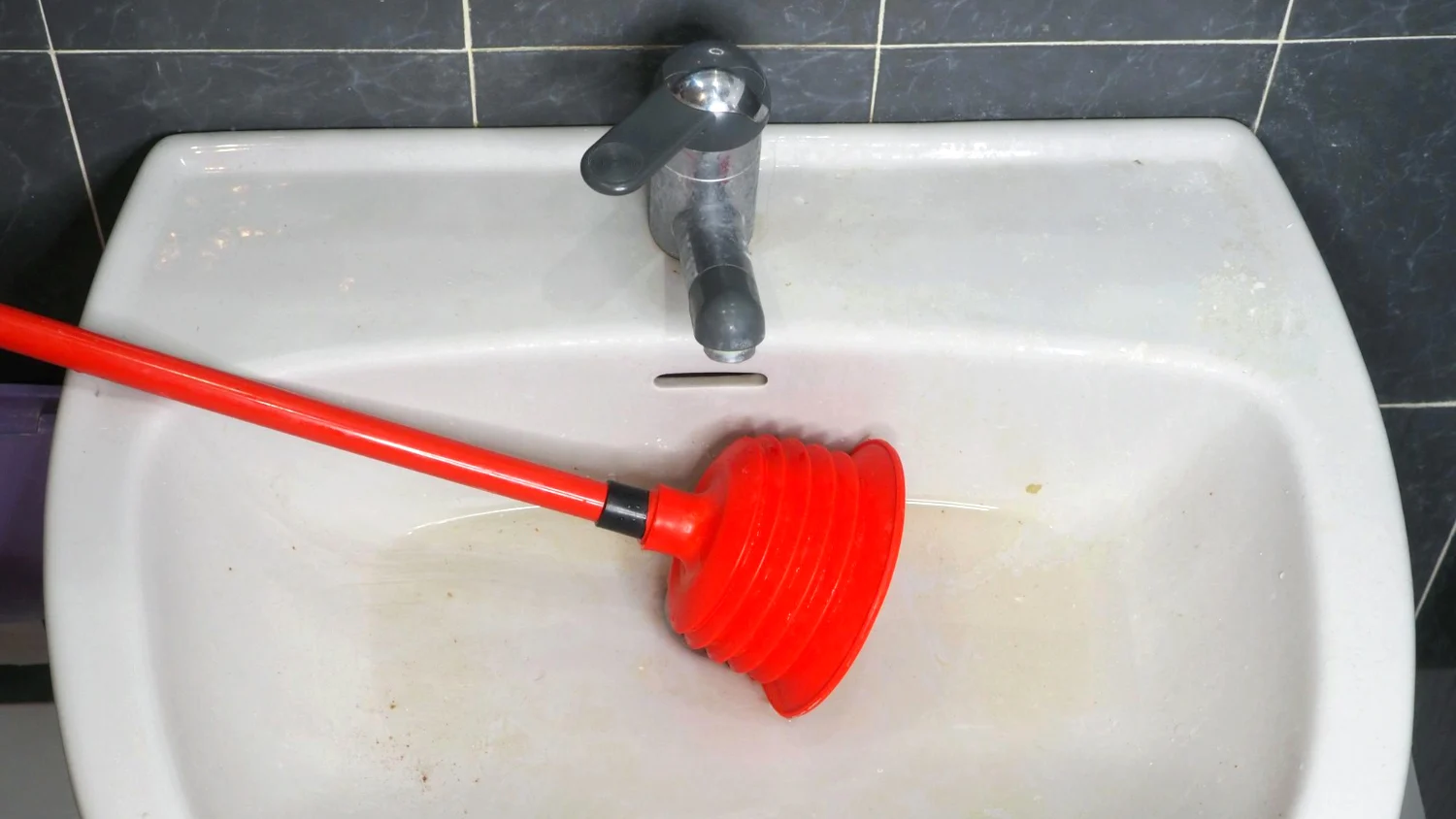
A sink plunger can shift a bathroom sink clog deeper in the drain line, especially if the clog sits below the drain opening.
Here is the right way to plunge a bathroom sink:
- Add enough water to cover the plunger cup.
- Block the overflow opening with a wet rag.
- Place the sink plunger over the drain.
- Pump up and down 6 to 10 times with firm, short strokes.
- Lift the plunger and test the drain.
Sealing the overflow matters. Without that seal, the plunger loses pressure and the bathroom sink clog stays put.
Step 6: Clean the Bathroom Sink P-Trap Under the Vanity

If the bathroom sink drain is still clogged, check the P-trap. The P-trap is the curved pipe under the sink. That bend catches debris. That bend also catches hair sludge.
How to Remove and Reinstall a Bathroom Sink P-Trap
- Put a bucket under the P-trap.
- Place an old towel around the cabinet floor.
- Unscrew the slip nuts on both ends of the P-trap.
- Lower the P-trap carefully and drain the dirty water into the bucket.
- Remove hair, sludge, and debris from inside the P-trap.
- Rinse the P-trap with hot water and dish soap.
- Reinstall the P-trap and hand-tighten the slip nuts.
- Run water and check for leaks.
A bottle brush or old toothbrush helps scrub the inside of the trap. If the P-trap is packed with black sludge, that sludge was likely slowing the bathroom sink for weeks before the full clog formed.
Step 7: Use a Plastic Drain Snake for a Stubborn Bathroom Sink Clog
A plastic drain snake is still a natural-style fix because you are not using caustic chemicals. You are physically removing the clog.
Insert the plastic drain snake slowly into the bathroom sink drain or through the trap opening. Twist gently. Pull the snake back out. Expect hair. A lot of hair.
Wipe the debris onto paper towels and repeat until the snake comes back cleaner. Then flush the drain with hot water.
This step is often the winner when the bathroom sink drain keeps backing up after baking soda and vinegar.
Step 8: Test the Bathroom Sink Drain and Clean the Stopper Before Reassembly
Run warm water, then hot water, for one to two minutes. Watch how quickly the basin empties.
A properly cleared bathroom sink drain should:
- Drain without pooling
- Avoid gurgling
- Smell clean
- Handle a full faucet stream without backing up
Before reinstalling the stopper, clean the stopper base again. If you put a dirty stopper back into a newly cleaned drain, buildup starts again right away.
Natural Bathroom Sink Unclogging Methods Compared
The best natural bathroom sink method depends on where the clog sits and what the clog is made of, not on which remedy looks best in a social media tip.
Here is a practical comparison:
| Natural bathroom sink clog method | Best for | Typical cost in the US | Time needed | Mess level | Main limitation |
|---|---|---|---|---|---|
| Remove pop-up stopper and hair | Hair wrapped near drain opening | $0-$5 | 5-10 minutes | Low | Does not reach deep clogs |
| Hot water + dish soap | Soap scum, light paste buildup | $0-$1 | 10 minutes | Low | Weak against thick hair plugs |
| Baking soda + white vinegar | Mild organic buildup and odor | $1-$3 | 15-25 minutes | Low | Limited effect on dense clogs |
| Sink plunger | Clogs just below drain opening | $5-$15 | 5-10 minutes | Medium | Must seal overflow opening |
| Clean P-trap | Sludge and hair caught in bend | $0-$10 | 20-40 minutes | High | Requires under-sink access |
| Plastic drain snake | Deep hair clogs in bathroom sink drain | $2-$8 | 10-20 minutes | Medium | Can snag if forced carelessly |
If you want the shortest path, use this order:
- Remove and clean the stopper
- Flush with hot water
- Use baking soda and vinegar
- Plunge the sink
- Clean the P-trap
- Use a plastic drain snake
That order saves time and avoids unnecessary disassembly.
What Not to Pour or Force Into a Bathroom Sink Drain
Many bathroom sink drains get damaged not by the original clog, but by the aggressive fix that comes after the clog.
Skip these bad ideas:
- Caustic chemical drain cleaner: Chemical drain cleaner can damage older pipes, soften gaskets, irritate skin, and leave dangerous residue in standing water.
- Bleach: Bleach does not remove hair clogs well and can create unsafe fumes if mixed with other cleaners.
- Repeated rolling-boil water dumps: Very hot water helps, but repeated boiling water can stress some PVC fittings and old glue joints.
- Wire hangers: A wire hanger can scratch chrome, damage the stopper linkage, and punch grime deeper into the drain.
- Random acids or “miracle” internet mixtures: Bathroom sink plumbing is not the place for experimentation.
If you already poured in a commercial drain cleaner, stop and read the label before taking apart the drain. Gloves and eye protection are smart. Any plumber will tell you the same.
How to Prevent a Bathroom Sink Clog Naturally
The easiest bathroom sink clog to fix is the bathroom sink clog you never let form.
A small weekly habit does more than a big emergency cleanup.
Weekly Bathroom Sink Drain Prevention
Once a week:
- Remove visible hair from the drain opening
- Run hot water for 30 to 60 seconds
- Wipe the stopper clean
- Rinse away toothpaste residue before leaving the sink
Monthly Bathroom Sink Drain Maintenance
Once a month:
- Remove the stopper
- Clean the stopper base and pivot area
- Pour a little dish soap into the drain
- Flush with very hot water
- Add a mesh drain screen if hair is a recurring problem
Bathroom Sink Habits That Reduce Clogs
Change a few habits and your drain stays cleaner:
- Do not rinse beard trimmings into the bathroom sink
- Do not leave toothpaste blobs sitting in the basin
- Use less heavy product near the sink when possible
- Wipe out soap film around the drain cap
- Clean the overflow opening occasionally
If hard water is a factor in your home, mineral buildup may keep returning. In that case, regular stopper cleaning and trap cleaning matter more than occasional baking soda treatments.
When a Bathroom Sink Clog Means You Should Call a Plumber
If the bathroom sink drain stays slow after stopper cleaning, trap cleaning, and snaking, the clog may be deeper in the branch line or tied to a larger plumbing problem.
Call a plumber if you notice any of these signs:
- The bathroom sink drain clogs again within days
- Multiple fixtures are draining slowly
- The bathroom sink backs up when another fixture runs
- A sewer odor is coming from the sink
- The drain pipe leaks after reassembly
- The wall-side drain line appears blocked beyond the P-trap
- The home has old galvanized drain piping with repeated buildup
A deeper clog can sit inside the wall, not under the vanity. At that point, a handheld plastic snake may not be enough. A plumber may use a longer auger, inspect the drain line, or identify a venting issue.
If you live in an older US home, recurring sink clogs can also point to rough interior pipe walls, corrosion, or long-term scale buildup. That is a different problem. A pantry fix will not solve pipe age.
Frequently Asked Questions About Unclogging a Bathroom Sink Naturally
These bathroom sink clog questions come up most often after homeowners try the first round of natural drain cleaning.
Can baking soda and vinegar unclog a bathroom sink with hair?
Baking soda and vinegar can help loosen soap film, deodorize the drain, and break up light residue around hair. Baking soda and vinegar usually do not dissolve a thick hair plug by themselves, so you still need to remove the stopper, clean the P-trap, or use a plastic drain snake.
Is boiling water safe for a bathroom sink drain?
Very hot water is usually safer than a rolling boil, especially in bathroom sinks with PVC piping or older slip-joint connections. If you are not sure what material your drain pipes are made of, use very hot tap water or carefully heated water instead of a full kettle at peak boil.
How do you unclog a bathroom sink naturally without vinegar?
You can unclog a bathroom sink naturally without vinegar by removing the stopper, pulling out hair, flushing the drain with hot water and dish soap, plunging the sink, and cleaning the P-trap. A plastic drain snake is also an excellent non-chemical option for deeper hair clogs.
Why does the bathroom sink keep clogging after I clean the stopper?
If the bathroom sink keeps clogging after stopper cleaning, the blockage is often sitting in the P-trap, branch drain, or wall line. Repeated clogs can also mean hard water scale, pipe roughness, or daily buildup from hair, toothpaste, and grooming residue that is reforming too quickly.
Is a natural enzyme drain cleaner good for a bathroom sink clog?
A natural enzyme drain cleaner can help maintain a bathroom sink drain and reduce organic residue over time. A natural enzyme cleaner is usually better for prevention and light maintenance than for a fully blocked bathroom sink packed with hair and sludge.